
Operational proof of concept completed — September 2026
The mobile irrigation infrastructure now exists in the field.
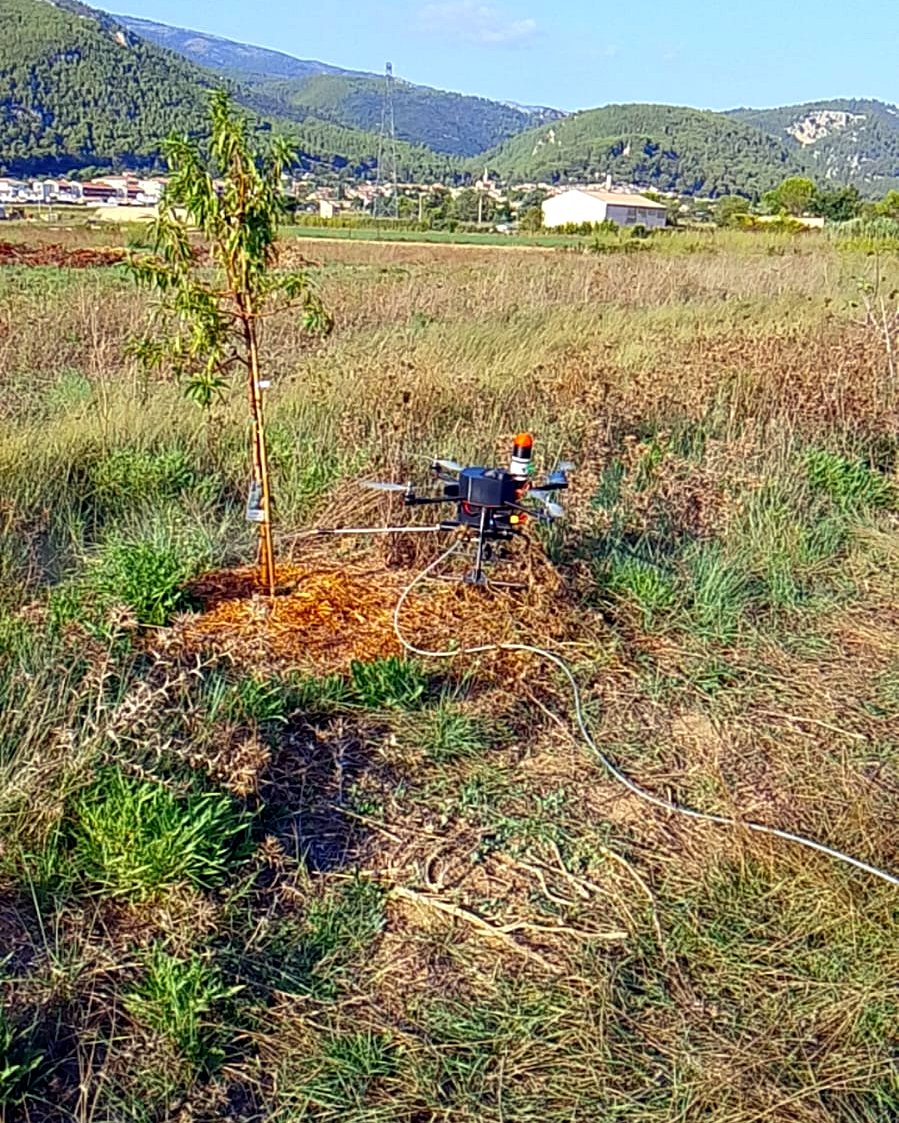
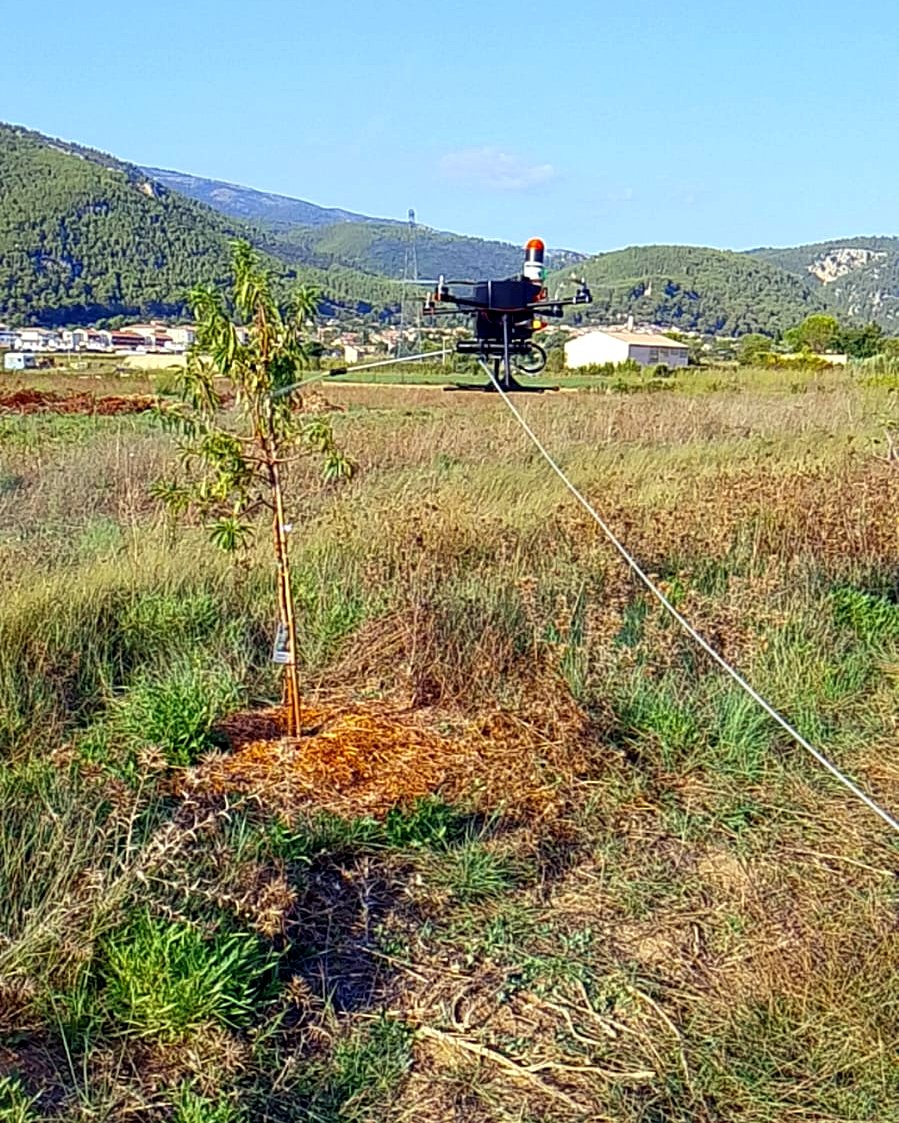
AGROMAX has moved its core thesis out of the document and onto the ground. On the Cuges-les-Pins pilot site, water was delivered from a portable reservoir, through an umbilical line, to an airborne unit holding position over individual young trees — reaching both the foliage and the root zone. No trench, no pump house, no fixed distribution network, no soil sealing.
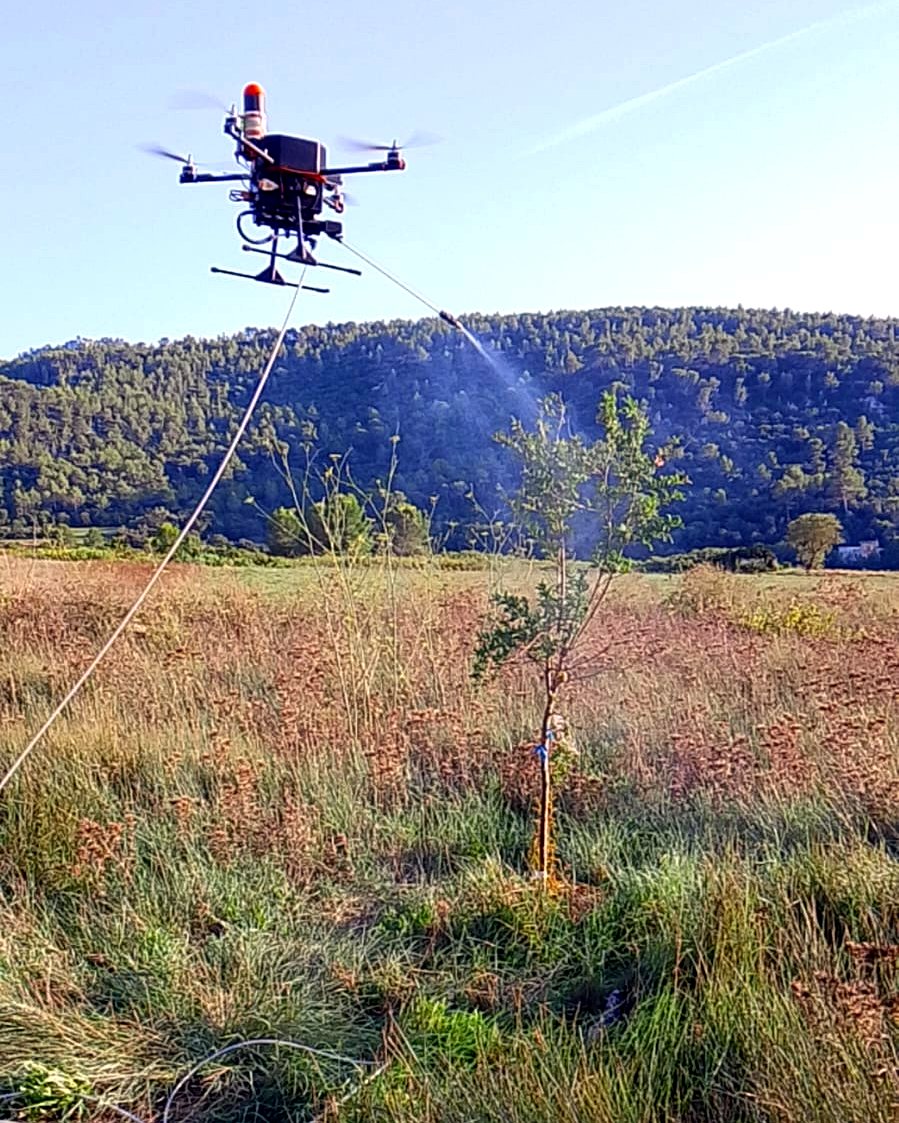
Water stays on the ground. Only the last few metres move.
AGROMAX does not lift an irrigation system into the air. The reservoir, the pump and the pressure stay where they belong — at ground level. What becomes mobile is the final segment of delivery, the one that is disproportionately expensive to build permanently on fragmented, sloped or temporarily used land.
-
Stage 1
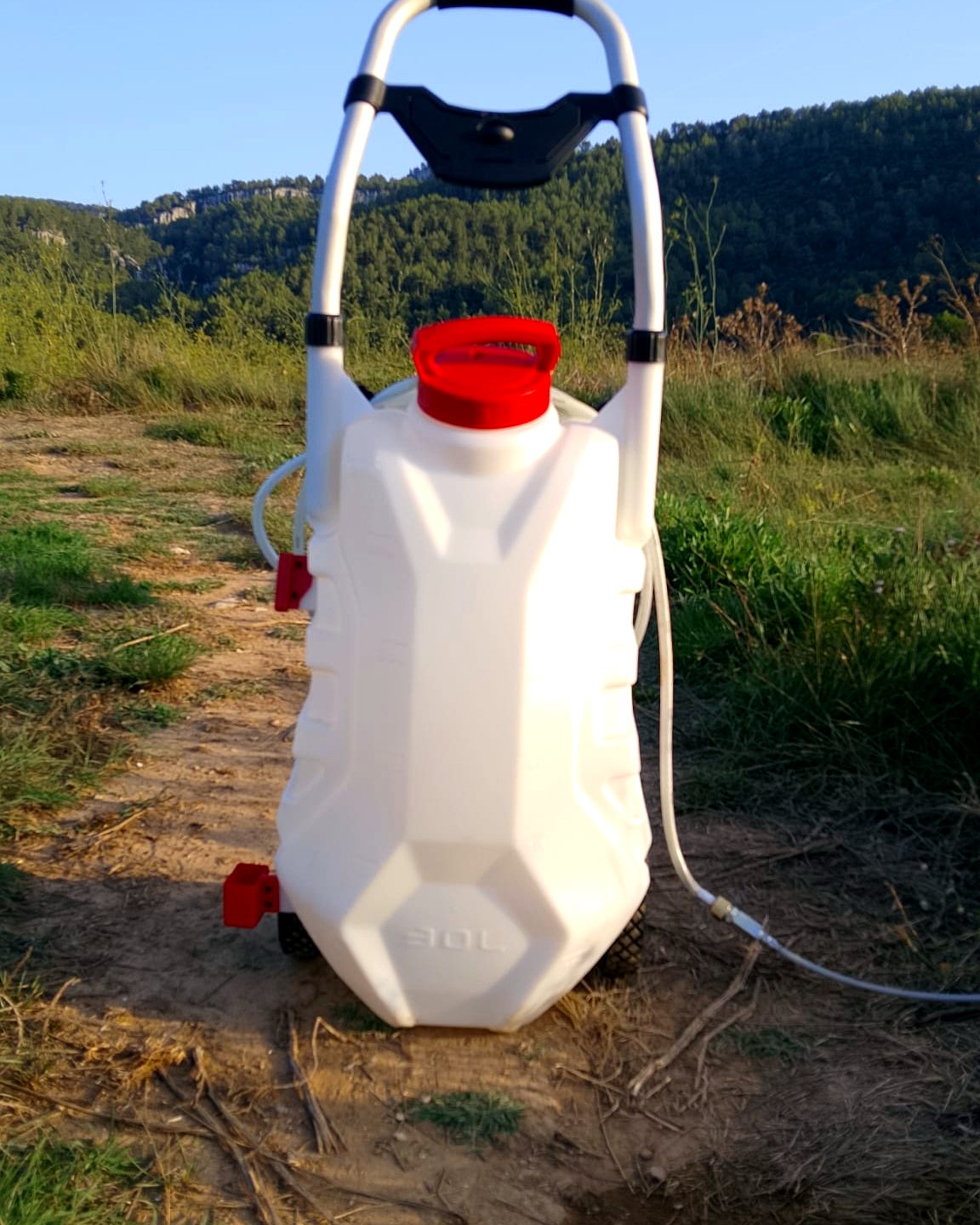
Portable ground reservoir
A 30-litre wheeled tank, brought to the plot and removed afterwards. Nothing is installed, nothing is left behind.
-
Stage 2
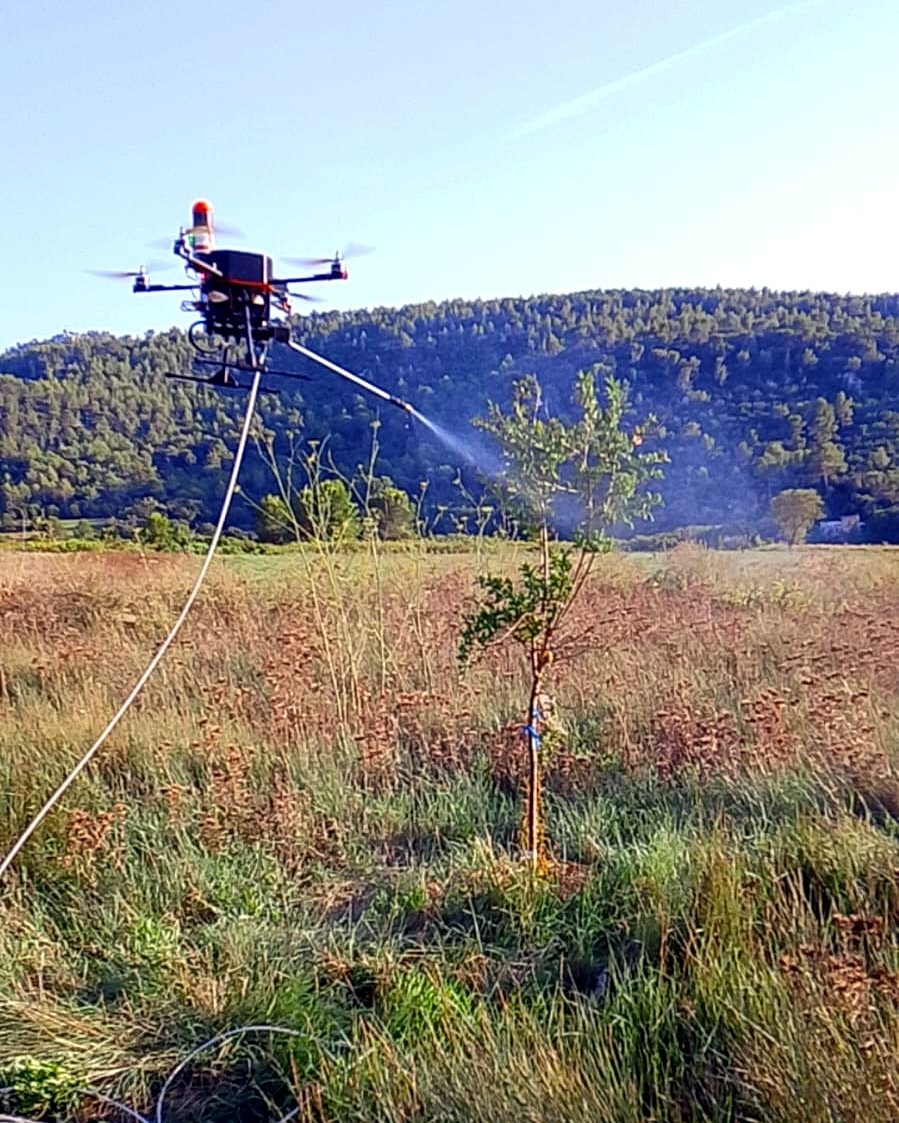
Umbilical supply line
A continuous feed from ground to air removes the payload ceiling that limits tank-carrying drones.
-
Stage 3
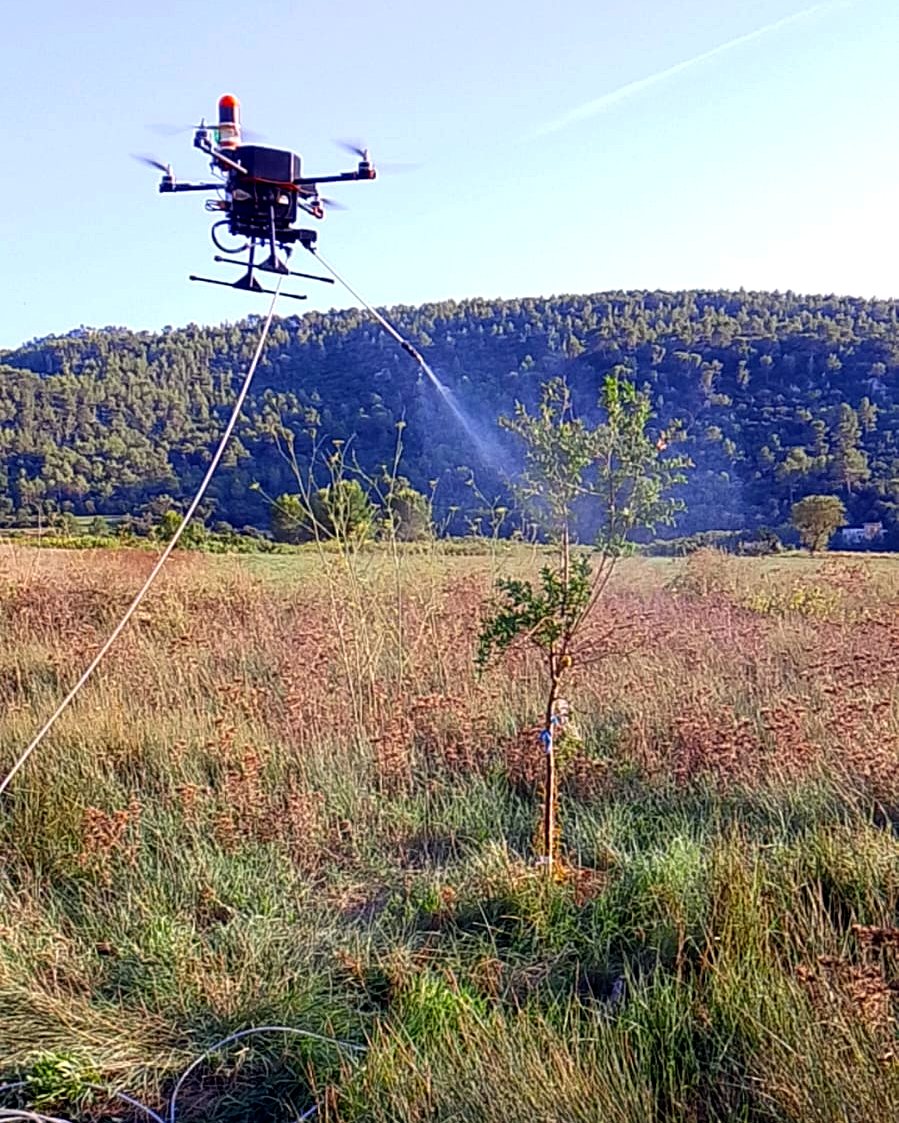
Positioning over the target
The unit holds station above a single identified tree — the plant is the target, not the parcel.
-
Stage 4
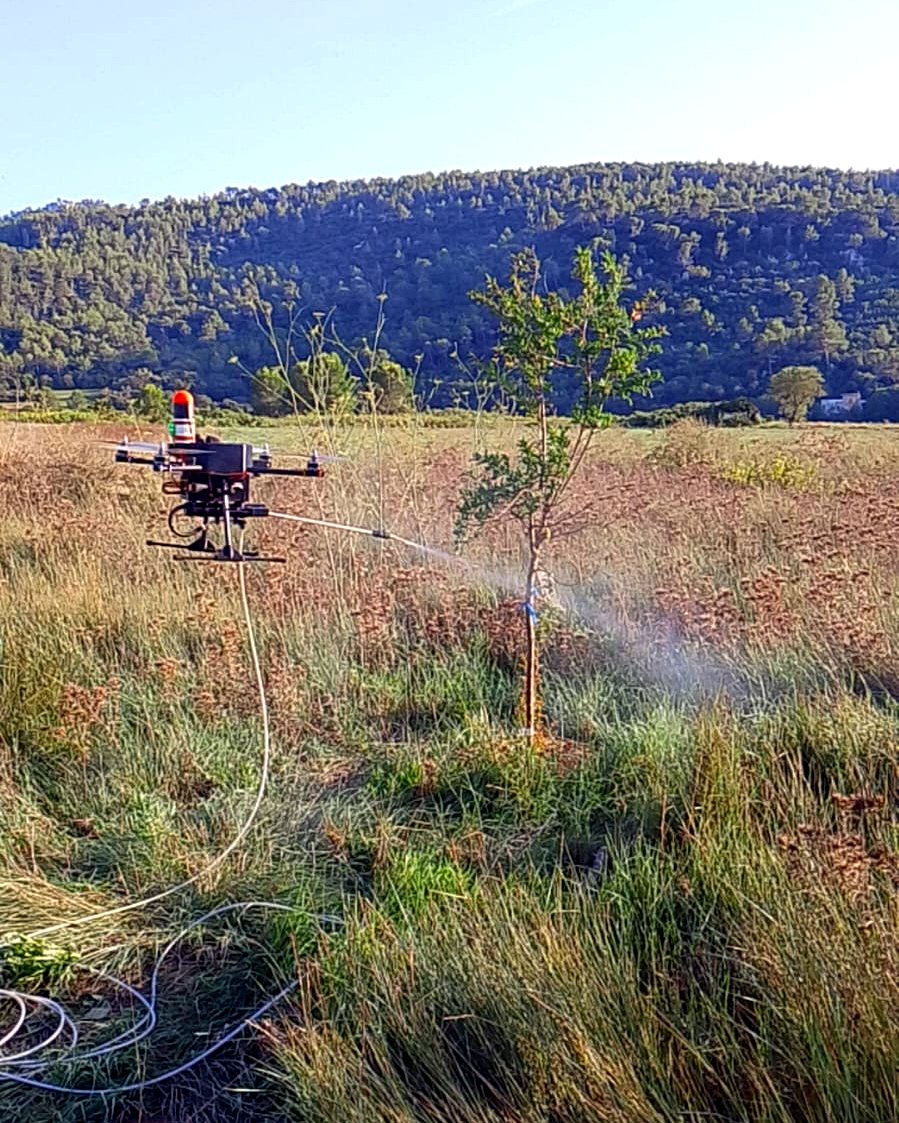
Delivery at the plant
Pressurised application reaching both the canopy and the root zone, recorded and logged per intervention.
What this proves, and what it does not.
AGROMAX is built on a single operating rule: we state what has been demonstrated, and we state what has not. Every claim we publish carries its confidence level. This is what makes our results usable by an institution, an auditor or an investor.
Demonstrated in the field
Observed and recorded on site.
- Continuous ground-to-air water supply through an umbilical line, under pressure.
- Stable positioning of the airborne unit over an individual target tree.
- Delivery reaching both the canopy and the base of the tree.
- Operation on real degraded, rainfed land with no water point and no fixed infrastructure.
- Full removal of equipment after the intervention — zero permanent footprint.
Not yet demonstrated
Scheduled for the next experimental phase.
- Certified water-saving percentage against a local reference practice.
- Delivered volume accuracy, measured per tree and per intervention.
- Endurance, operating radius and trees treated per session.
- Cost per established tree at operational scale.
- Agronomic causality and repeatability across multiple sites.
Verified — observed and recorded Hypothesis — reasoned, not yet tested To be measured — planned protocol
The system in operation.
Continuous footage of a full intervention cycle, recorded on site.
Cuges-les-Pins pilot site, September 2026. Unedited field recording.
On site.
Dry Mediterranean conditions, clay-limestone soil, no irrigation network within reach. The kind of land where fixed infrastructure is rarely built — which is exactly why it stays dormant.
From a stated thesis to a working system.
This proof of concept was built and operated at our own cost, on land we secured ourselves, in conditions we did not choose to flatter the result. It establishes that the delivery architecture behind AGROMAX is mechanically sound.
The next phase turns that architecture into measured evidence: instrumented volumes, controlled comparison against reference practice, and cost per established tree. That is what our first financing round is for.
Request the technical dossierSKY WATER SAS — Marseille, France. AGROMAX pilot site AGX-FR-CUG-2026-C01, operated under a SAFER Région Sud land-use agreement. Patent application filed with INPI (FR2606526). All imagery recorded on site and published unretouched in substance.